Doug Glover published this today in Numéro Cinq.
What does the survivor of violence need in order to heal?
Because I know many survivors of so many kinds of violence, it’s a question I often ask myself. I’ve begun asking it as well in the arts-based workshops I’ve developed to boost reading and writing skills while promoting social justice. In Colombia, a word that came up over and over again was “justice.” In the US, people often say “a voice.” In Cochabamba, Bolivia, the word was “love.”
And though I arrived in Cochabamba with some trepidation, I felt immediately loved and embraced. I’d been invited by Edson Quezada, the founder and director of the nonprofit organization Educar es fiesta, to share my techniques. But the invitation had come because I was supposed to be collaborating with Argentinean theatre artist Silvana Gariboldi. A dispute over gas fields closed the border between Argentina and Bolivia. Silvana couldn’t cross. I ended up in Bolivia alone.
Edson Quezada, known to all as Queso (or Cheese, from his last name, not because he’s the Big Cheese) founded Educar es fiesta just over ten years ago based on the conviction that training in the arts is training for life, that happiness is a child’s birthright and that learning must go hand-in-hand with joy.
The teaching artists and facilitators in the program have taught circus and theatre arts to hundreds of young people living in difficult circumstances while offering support to families in crisis. The organization earns money through sales of tickets to their shows and receives some grant support from Caritas, an Australian organization and — this blew my mind — the foreign aid program of
Liechtenstein.
The children in the program get hugs and kisses too, something that is, unfortunately, forbidden in the United
States.
Doña Ceci told me her brother lives in Miami which is where her niece and nephew have been raised. “They are very strange children. Very cold,” she said. “They don’t let you hug or kiss them.” When she asked her brother about it, he said, “It’s what they teach them in school.” Ceci works full-time as does her husband but they have trouble making ends meet. In spite of this, she said, “I’m glad my children are growing up here instead of there.”
It’s not that members of the Educar es fiesta team are unaware of the sexual abuse of children, and they know that some of the kids who come to them are survivors. They are never alone in a room with a child but there is no prohibition against warmth and affection.
When the children are gone, life in the office can become more . . . well, adult.
February 16 was Día de las comadres in Bolivia which meant that all over town, male workers had to celebrate their female colleagues. In the Educar es fiesta office, the men (some in drag) offered us serenades and humor raunchy enough to be considered sexual harassment in the US. They danced with us. Then they cooked and served a great lunch — and cleaned up afterwards.
Día de las comadres is also Girls Night Out. Jimena and Alejandra — two of the teaching artists — belong to an all-female folkloric group. They invited me along on their gig at a family restaurant which that night should have lost its presumed PG rating.
More than a dozen large women of a certain age (hmmm, like my age?) drank pitcher after pitcher of chibcha, the local alcohol. We danced in a circle and then snaked out into the pouring rain and back while the waitress circulated from table to table, flipping up her apron to reveal a mighty long strap-on. My friends sang in Spanish and in Quechua and played traditional music on drums and
sampoña pan-pipes. The restaurant owner sashayed through the crowd carrying a huge boy doll to which she had attached pubic hair, balls, a correspondingly huge dick complete with semen dribbling from the tip, and a sign reading 1 boliviano la tocadita. (14 cents for a little touch). She also put a male-organ-enhanced cap on my head. First time in my life I’ve danced the night away with a penis bobbing from my forehead.
Sorry, no one got photos. (At least none we are willing to share).
“Is Día de las comadres always observed this way?” I asked one of the musicians.
“It’s not my way,” she answered.
In the morning, back at the office, Hernán said it probably had more to do with the excesses and role reversals of Carnaval which was about to begin. “It’s an unfortunate part of our culture, of our machismo,” he said.
“But it makes fun of machismo,” I argued.
“Do you think a woman who’s been assaulted finds it funny?” he asked.
Much as I would like brutality to be rendered ridiculous — because looking ridiculous is surely something the ultra-macho will wish to avoid — and much as I had enjoyed laughing, I was confronted once again with my question: What does the survivor need?
“On our day — día de los compadres — I didn’t like what the women did to us either,” he added.
*
The whole city shut down tight for a two-day holiday so I holed up in the office with potatoes, hominy, cheese, bread, hot sauce, peaches, and about a pound of llama meat while I worked on the pedagogical guide the program requested — step-by-step instructions of everything I presented in the workshops and discussions, including Objectives, Methodology, and Outcomes for each
exercise. Yikes! just the kind of structure I´d managed to avoid all my life. (Though maybe once I translate it into English, I’ll actually find it useful at home). Willmer will have to correct the Spanish and add the accent marks I couldn’t seem to find on the keyboard, which presented its own challenge since the arrangement varies from the English keyboard and the letters were missing from several of the keys. And I imagine we’ll have some conversations via email when he discovers I couldn’t always distinguish between Objectives and Outcomes. (Willmer also tried to teach me how to eat a salteña without dripping gravy all
over myself and the immediate vicinity).
One of the women came to check up on me.
So I asked her, “Día de los compadres. What did you do to the men?”
“We made them drink from a pitcher.”
It took some prompting, but the pitcher came out of hiding.
“Can I take a picture?”
“No!”
“Please.”
“OK. But I don’t want to be in it.”
“Please.”
“OK. But promise you’ll never show it to anyone.”
“Please. People will enjoy it.”
“OK. But you have to do something to block out my face.”
What does the survivor of violence need in order to heal?
Because I know many survivors of so many kinds of violence, it’s a question I often ask myself. I’ve begun asking it as well in the arts-based workshops I’ve developed to boost reading and writing skills while promoting social justice. In Colombia, a word that came up over and over again was “justice.” In the US, people often say “a voice.” In Cochabamba, Bolivia, the word was “love.”
And though I arrived in Cochabamba with some trepidation, I felt immediately loved and embraced. I’d been invited by Edson Quezada, the founder and director of the nonprofit organization Educar es fiesta, to share my techniques. But the invitation had come because I was supposed to be collaborating with Argentinean theatre artist Silvana Gariboldi. A dispute over gas fields closed the border between Argentina and Bolivia. Silvana couldn’t cross. I ended up in Bolivia alone.
Edson Quezada, known to all as Queso (or Cheese, from his last name, not because he’s the Big Cheese) founded Educar es fiesta just over ten years ago based on the conviction that training in the arts is training for life, that happiness is a child’s birthright and that learning must go hand-in-hand with joy.
The teaching artists and facilitators in the program have taught circus and theatre arts to hundreds of young people living in difficult circumstances while offering support to families in crisis. The organization earns money through sales of tickets to their shows and receives some grant support from Caritas, an Australian organization and — this blew my mind — the foreign aid program of
Liechtenstein.
The children in the program get hugs and kisses too, something that is, unfortunately, forbidden in the United
States.
Doña Ceci told me her brother lives in Miami which is where her niece and nephew have been raised. “They are very strange children. Very cold,” she said. “They don’t let you hug or kiss them.” When she asked her brother about it, he said, “It’s what they teach them in school.” Ceci works full-time as does her husband but they have trouble making ends meet. In spite of this, she said, “I’m glad my children are growing up here instead of there.”
It’s not that members of the Educar es fiesta team are unaware of the sexual abuse of children, and they know that some of the kids who come to them are survivors. They are never alone in a room with a child but there is no prohibition against warmth and affection.
When the children are gone, life in the office can become more . . . well, adult.
February 16 was Día de las comadres in Bolivia which meant that all over town, male workers had to celebrate their female colleagues. In the Educar es fiesta office, the men (some in drag) offered us serenades and humor raunchy enough to be considered sexual harassment in the US. They danced with us. Then they cooked and served a great lunch — and cleaned up afterwards.
Día de las comadres is also Girls Night Out. Jimena and Alejandra — two of the teaching artists — belong to an all-female folkloric group. They invited me along on their gig at a family restaurant which that night should have lost its presumed PG rating.
More than a dozen large women of a certain age (hmmm, like my age?) drank pitcher after pitcher of chibcha, the local alcohol. We danced in a circle and then snaked out into the pouring rain and back while the waitress circulated from table to table, flipping up her apron to reveal a mighty long strap-on. My friends sang in Spanish and in Quechua and played traditional music on drums and
sampoña pan-pipes. The restaurant owner sashayed through the crowd carrying a huge boy doll to which she had attached pubic hair, balls, a correspondingly huge dick complete with semen dribbling from the tip, and a sign reading 1 boliviano la tocadita. (14 cents for a little touch). She also put a male-organ-enhanced cap on my head. First time in my life I’ve danced the night away with a penis bobbing from my forehead.
Sorry, no one got photos. (At least none we are willing to share).
“Is Día de las comadres always observed this way?” I asked one of the musicians.
“It’s not my way,” she answered.
In the morning, back at the office, Hernán said it probably had more to do with the excesses and role reversals of Carnaval which was about to begin. “It’s an unfortunate part of our culture, of our machismo,” he said.
“But it makes fun of machismo,” I argued.
“Do you think a woman who’s been assaulted finds it funny?” he asked.
Much as I would like brutality to be rendered ridiculous — because looking ridiculous is surely something the ultra-macho will wish to avoid — and much as I had enjoyed laughing, I was confronted once again with my question: What does the survivor need?
“On our day — día de los compadres — I didn’t like what the women did to us either,” he added.
*
The whole city shut down tight for a two-day holiday so I holed up in the office with potatoes, hominy, cheese, bread, hot sauce, peaches, and about a pound of llama meat while I worked on the pedagogical guide the program requested — step-by-step instructions of everything I presented in the workshops and discussions, including Objectives, Methodology, and Outcomes for each
exercise. Yikes! just the kind of structure I´d managed to avoid all my life. (Though maybe once I translate it into English, I’ll actually find it useful at home). Willmer will have to correct the Spanish and add the accent marks I couldn’t seem to find on the keyboard, which presented its own challenge since the arrangement varies from the English keyboard and the letters were missing from several of the keys. And I imagine we’ll have some conversations via email when he discovers I couldn’t always distinguish between Objectives and Outcomes. (Willmer also tried to teach me how to eat a salteña without dripping gravy all
over myself and the immediate vicinity).
One of the women came to check up on me.
So I asked her, “Día de los compadres. What did you do to the men?”
“We made them drink from a pitcher.”
It took some prompting, but the pitcher came out of hiding.
“Can I take a picture?”
“No!”
“Please.”
“OK. But I don’t want to be in it.”
“Please.”
“OK. But promise you’ll never show it to anyone.”
“Please. People will enjoy it.”
“OK. But you have to do something to block out my face.”
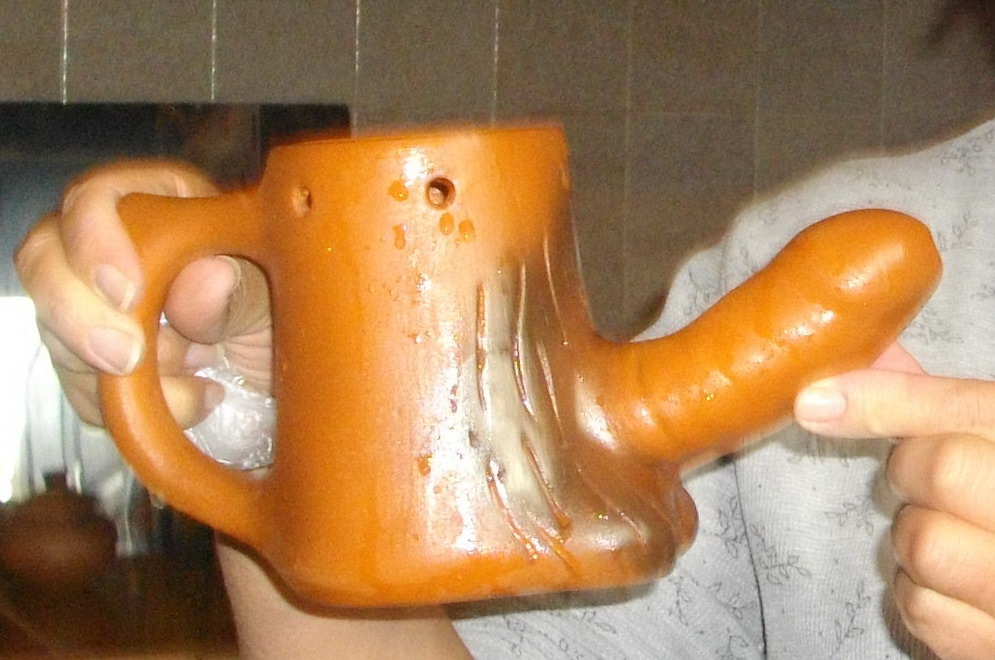
We laughed together.
But Hernán's objection wouldn't go away. Would this picture be amusing to someone who has lived through the horror of rape?
So I'm still asking what the survivor needs.
Maybe laughter isn't the answer. But surely the day when she's able to laugh again, she'll know how far she's traveled on the
road to healing.
But Hernán's objection wouldn't go away. Would this picture be amusing to someone who has lived through the horror of rape?
So I'm still asking what the survivor needs.
Maybe laughter isn't the answer. But surely the day when she's able to laugh again, she'll know how far she's traveled on the
road to healing.


 RSS Feed
