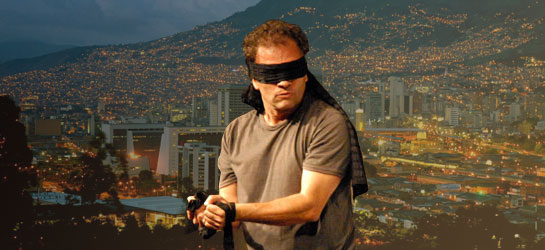
My article just up in LA Progressive Part 2 of a two-part series. See also “Seeking Unity Across Sex, Race & Class”
Civil rights attorney Michelle Alexander reported in her book, The New Jim Crow, that largely as an intentional consequence of the war on drugs, there are more African American men under correctional control now than were enslaved in 1850. People of color have been rounded up en masse for relatively minor, non-violent drug offenses. Alexander concluded all this came about in part as a strategy to deprive African Americans of rights, including the right to vote.
William J. Stuntz, Harvard Law professor, evangelical Christian and self-identified conservative, (who sadly died much too young, before his book, The Collapse of American Criminal Justice was published in 2011) argued that black people are disproportionately imprisoned because they commit more crimes, that incarceration rates have risen in part because the system used to be too lenient, that incarceration keeps at least the incarcerated from committing more crimes, and that police carry out drug sweeps in certain neighborhoods as a strategy to get gang members off the streets when threats against witnesses and the no-snitch culture create daunting obstacles to the arrest and prosecution of violent criminals. Though Stuntz begins his book providing rational (non-racist) reasons for racial disparity, he does conclude the effects are racialized and lead to the collapse of the rule of law.
Given their different perspectives, it’s striking that both Alexander and Stuntz reach some of the same conclusions and identify some of the same systemic problems in the American way of criminal justice. Even more striking to me is that when I listened to the anti-prison activists and former prisoners who spoke on Saturday, March 24 as part of the Teach-In “Sex, Race, and Class: What Are the Terms of Unity?” I heard some unity between their ideas and Stuntz’s.
He would surely have characterized them as radicals. (Selma James, the keynote speaker for the Teach-In and editor of Mumia Abu-Jamal’s latest book, said the people inside prison “have a political education we all need. A lot of the leadership of our movement is inside. We need them and we need them out.”)
The panelists would surely have strenuously disagreed with much of Stuntz’s book, but they are living examples of the injustice he identified in the system.
This essay will consider how the activists’ experiences align with Stuntz’s critique.
Susan Burton went to prison six times for drug offenses during the years she was in despair and became addicted to crack cocaine after her 5-year-old son was killed, run over by a police car. It was only after serving the sixth sentence that she was able to access drug treatment. Today, as the founder of A New Way of Life, she runs five homes that provide housing for formerly incarcerated women in Los Angeles and she also works with All of Us or None, a group advocating for the rights of former prisoners who leave State custody with a record that often deprives them of the vote and stands in the way of employment even while they are barred from receiving food stamps or living in subsidized housing, all of which too often leads to their children being permanently taken from them.
“We have to disrupt the flow of what’s happening,” she said at the Teach-In. And her most disruptive idea is this one, aimed at throwing a monkey wrench into the process of mass incarceration: What if every person arrested refused plea bargain offers and instead demanded her or his Constitutional right to a trial? Right now, she said, when a prosecutor threatens you with a 15-year sentence but says you’ll only be locked up for two years if you waive a trial and plead guilty, of course people say, “Let me take the two because I’m scared of the 15. That’s what the system relies on.”
Michelle Alexander wrote about Burton’s idea in an op-ed in the New York Times–”Go to Trial: Crash the Justice System,” because in a system in which more than 90% of criminal cases are resolved by guilty pleas, and resources are entirely lacking for the trials that defendants are entitled to, a complete breakdown is exactly what would happen.
What does Stuntz say? He puts the percentage of cases resolved by guilty pleas even higher — at 95%, most by plea bargains, and cites plea bargains as part of the greatest injustice. Unlike what we see each week on CSI, “noninvestigation is the norm.” Prosecutors clear cases through pleas but no one investigates to be sure the defendant is actually guilty–not the D.A. and not the indigent defendant’s appointed counsel who has only a brief time to represent the client. He writes, “punishment deters crimes only if crime, not innocence, receives punishment.” That is not happening.
Like many conservatives, Stuntz is withering in his criticism of the Warren Court’s decisions that protected the rights of criminal defendants, because this made the jobs of police and prosecutors much harder. But he also saw that by focusing on procedural safeguards–Did the defendant get a Miranda warning? Was there probable cause? Was evidence obtained through a proper search warrant?–the Court overlooked what was more important: The substance of justice. Search for the truth of either innocence or guilt. This is a critique people on the left will agree with as today we end up with Antonin Scalia asserting that as long as procedures have been followed correctly, “actual innocence” is no bar to execution.
The Court has mandated “due process” but not “equal protection.” And African Americans do not enjoy “equal protection of the law” in court or in low-income predominately black neighborhoods which he says are “under-policed” (while Susan Burton says they are “over-policed.”) But Stuntz’s point is that the police are present as a punitive force, not a protective one in African American neighborhoods: black-on-black crime is not prevented and is rarely punished. He urges more community policing and less SWAT.
In this respect, he is in line with civil rights attorney Connie Rice who has urged that the rewards structure within the Los Angeles police department be changed. An officer should move up in the ranks not for having the highest number of arrests but rather for bringing the incidence of crime down by being a stabilizing presence in the neighborhood.
While Stuntz has an idealized view of the police compared to the perspective of young people who are stopped and harassed daily on the way to school and to families mourning the death of an unarmed loved one shot by an officer, he stresses that the real decision making power and severity doesn’t lie with the police but with prosecutors.
Prosecutors decide whether or not to bring a case and what charges to file and what plea bargain to offer. It’s in this realm of prosecutorial discretion that African American defendants suffer most and have little recourse. As Stuntz writes: “As long as their decisions are not racially motivated” and it’s rarely possible to provide proof of someone’s intentional and knowing discriminatory motive, “police officers and prosecutors have unreviewable discretion to decline to arrest or prosecute offenders.”
Another trick prosecutors use to obtain plea bargains is to file (or threaten to file) a range of charges for a single offense with separate sentencing for each charge. A crime that would ordinarily carry a sentence of a year or two suddenly adds up to something approaching a life sentence. Who wouldn’t take a plea? And in death penalty states, writes Stuntz, the way capital punishment is used most is to induce people–whether guilty or not–to confess. If they accept a plea, the State will take the death penalty off the table. Stuntz likens this to extortion. At the Teach-In, we heard from 76-year-old Hank Jones, one of the San Francisco 8. In 1971, a San Francisco police officer was killed during an assault on a police station. Members of a Black Panther Party splinter group were later arrested in New Orleans, stripped naked, beaten, blindfolded and subjected to more torture including electric probes to the genitals until they confessed to the crime and, after more torture, named names to implicate others in the Panther Party, including Jones. The case was thrown out because confessions obtained by torture were inadmissible.
Fast-forward to 2003. Following passage of the Patriot Act, Jones and others who had been named were suddenly arrested and charged again, this time under the new law with “domestic terrorism.” Not only were they being charged under a law that didn’t exist when the crime was committed in 1971, but the Bush administration, as we know only too well, had no qualms about torture and apparently believed public and judicial opinion would now support its use.
The San Francisco 8 benefited from the committed representation of activist attorneys. Most people targeted by prosecutors don’t fare as well.
What happened to Hank Jones is an example of another problem cited by Stuntz: criminal law being made not by judges and juries, but by legislatures that pass bills leaving little room for discretion–or mercy–and with little regard for the possible consequences.
The Illegal Immigration Reform and Immigrant Responsibility Act of 1996 mandated the deportation of legal immigrants who had committed felonies. In complete disregard of legal history and fairness, the law was made retroactive. Immigrants who had committed offenses even decades earlier, had since lived entirely law-abiding lives, held jobs, had married and were raising children, were suddenly detained and deported leaving their families in abandonment and poverty. And of course many of them had never seen trial for their offenses but had taken plea bargains–sometimes receiving probation and no jail time, but now found those guilty pleas meant ruined lives.
Alex Sanchez, a founding member of All of Us or None, explained at the Teach-In that most immigrants rights organizations in LA don’t assist those who’ve been labeled criminals. Homies Unidos, the organization he co-founded offers services to exactly that population: gang members, former gang members, men with tattoos who face likely torture and assassination at the hands of death squads if they are sent back to Central America. His own work as a peace-builder and gang intervention worker brought him so many allies in the community that Sanchez, born in El Salvador and a former gang member, had enough support to help him win asylum. At the same time his work brought him enemies in law enforcement. He continues to be targeted by prosecutors and is now out on bail after his arrest on what the community–which raised bail money–sees as trumped-up charges of continued gang activity.
“Mass incarceration has failed to suppress gangs,” Sanchez said. He cited gang truces that over and over again have led to a dramatic drop in gang violence. But after “the peace truce you have to bring resources. They have never brought resources into the community.”
James, Burton, Jones, and Sanchez would certainly agree with Stuntz that the US justice system is now “the harshest in the history of democratic government.”
How did we get here? Again, resources. Stuntz thought these were misallocated. Cities and counties pay for police and prosecution. States and the federal government pay for prisons. While more police on the street have a much more significant deterrent effect on crime than more incarceration, cash-strapped localities find it cost-effective to process cases quickly through plea bargains and pass the prisoners along to the State. (It remains to be seen if the release of some State prisoners back to the counties as mandated now in California will have an effect on how many new cases are prosecuted, especially for minor drug offenses.)
By the end of his book, after immersing himself in study of our criminal justice system, Stuntz begins to sound like a radical himself:
“African American imprisonment rates came to exceed the rate at which Stalin’s Soviet Union incarcerated its citizens. Residents of black neighborhoods increasingly believed, with reason, that their life choices were limited to those Pushkin identified two centuries ago: they could ally themselves with their prison-bound young men or with the system that bound them. Tyrants, traitors, prisoners–none were good options. No wonder black neighborhoods in the early twenty-first century, when imprisonment rates were reaching their peak, spawned a “don’t snitch” movement.”
He recognized that when a community sees daily injustice and doesn’t see the rule of law equally applied, it becomes morally and ethically easier to choose to live in a lawless way.
If we want to bring peace to our communities, yes, we need resources. And we need to see that true justice is also a necessary resource which our neighborhoods demand and for which we still wait.

Beneath the Blindfold Protesting at the gates of Ft Benning in Georgia, November 2006, I met Kathy Berger and Ines Sommer, Chicago filmmakers, who were dedicating years of their lives to making a documentary about torture survivors. Instead on focusing on the horrific acts, on the scandals, the exposés, they wanted to show the aftermath in the lives of human beings. Hector was one of the survivors whose lives they planned to film. We’ve stayed in touch but Jan 18 was my first chance to see the finished product, Beneath the Blindfold, at a screening at International House, University of Chicago, organized to coincide with the events planned for Hector and me. It was extra exciting because the documentary had just had a sold-out screening at the Gene Siskel Film Center, which meant an extra encore show was quickly scheduled. And we were thrilled to see the work get attention from The Atlantic, even before its real release. Besides Hector, they profile Matilde de la Sierra, a physician from Guatemala who made the mistake of trying to provide medical care to the indigenous; Blama Massaquoi, of Liberia, forced into service as a child soldier and then forced to drink a caustic substance that destroyed his esophagus; Mario Venegas of Chile; Donald Vance, the former Navy man who was detained and tortured by US forces at Camp Cropper (same facility that held Saddam Hussein) after he became a private contractor and blew the whistle on his employer selling US arms to insurgents. We also got to have dinner with Sarah Moberg of the University's Human Rights Program. Sarah did a lot to make the screening possible. Thank you! It was gratifying to see the audience response to these very human stories. And I very much enjoyed seeing Hector’s kids, Gabo and Camilla as they looked years ago. (They’re all grown up now and very sophisticated teens.) And his mother, who is usually so quiet being outspoken enough to loudly argue that Hector’s performances prove his masochism. Less pleasing, the footage of me — at Ft. Benning and at the Healing Club event at the Program for Torture Victims as we celebrated the grant of asylum to Meluleki, survivor from Zimbabwe. I hope this film gets seen!
On June 28, the LA Times published Letters to the Editor taking issue with David Petraeus's statement about favoring torture under special circumstances, one by author Jon Krampner and one by me. Today, I received a copy of a letter a William C. Bradshaw of Apple Valley sent to someone named Bob, copying our printed letters and commenting: Here we have a "writer" and a "human rights activist" -- both of whom apparently forgot 9/11. Strange how some people are totally incapable of equating mass homicides with "torture." "Torture" is merely temporary......picky, picky, picky......Nice of him to send copies to both Jon Krampner and me. But I had to read this over several times. I'm still not entirely sure what Mr. Bradshaw's point is (and why I apparently don't count as a writer). Disagreement is legit, of course, but I wonder who Bob is, and most of all, am a little uncomfortable that my home address was so easy to find. Our letters as they appeared in the newspaper: It's still just torture
Re "Petraeus talks torture," June 24 Army Gen. David A. Petraeus favors, as The Times put it, "special interrogation techniques when a detainee is withholding information that is immediately needed to save lives." Let's not mince words: Petraeus favors torture. It starts with "a ticking time bomb." First, it has to be nuclear. Then any kind of bomb. Then you just want to save lives. Next thing you know, you've got an illegal prison in Guantanamo, a torture palace at Abu Ghraib, black sites in Eastern Europe and a program of illegally kidnapping people ("extraordinary rendition") to get them there. Petraeus should not be confirmed as CIA director, and Bush (and Obama) administration officials found to have designed or implemented programs of torture should be prosecuted as war criminals. Jon Krampner Los Angeles I am so sick of hearing about the "ticking time-bomb" scenario that is a staple in hour-long TV dramas. I have yet to hear a single apologist for so-called enhanced interrogations give a single example of this occurring in real life. In practical terms, if I were a terrorist with a ticking time bomb, I could lie and mislead long enough for it to go off. But what really matters is this: There is no excuse for torture. Period. Diane Lefer Los Angeles Update December 12, 2012: for anyone who happens to be searching on-line for Mr. Bradshaw's name, here's the text of the letter I have now received from him. I still don't know how he got my street address (which I am omitting here), but you can all relax. He's a man of opinions, not threats. Post Office Box 1223 Apple Valley, CA 92307 30 November 2012 Dear Ms. Lefer, Since you'll probably share this note with your contributors I'll be brief. I - I can't fathom why you created a penpal club with those people I've had issues. 2 - On so many issues, your contributors are so very very wrong! 3 - Irrespective of cited issues and contrary to your members, I am not right-wing. 4 - Admittedly, some of my views aren't in concert with some people in the L.A. area. 5 -1 fully understand the First Amendment --- and disagreeing with others. 6 - It should be no secret that newspaper letters staffs can show "favorites." 7 - The people who have received my letters can either respond or ignore them. 8 - And some of my letters --- contrary to some views --- have been complimentary. 9 - I've never contemplated using "expletives" or obscene phone calls. 10 - Neither the postal inspectors nor police have any qualms with my letters. Sincerely, William Bradshaw P.S. In providing my correct address, I've never intended to offend or drive anyone into fear.
Reckoning with TortureJune 27, 2011 By Diane Lefer Stephen F. Rohde, Chair of the ACLU Foundation of Southern California, holds the distinction of having confronted John Yoo twice. As you’ll recall, John Yoo was one of the torture apologists in the Bush administration who came up with tortured legal reasoning to justify the president’s violation of federal and international law. He became notorious for asserting that if the president felt it necessary, he could order a child’s testicles crushed in order to get the father to talk. The first time Rohde confronted him, giving Yoo the opportunity to amend his statement, the former Office of Legal Counsel mouthpiece still insisted torture was OK, as long as “limited to what is necessary.” I’ll get to the second confrontation in a bit. And will also skip over all the evidence and expert opinion that torture doesn’t work if the goal is actionable intelligence, that it’s counterproductive in both the long and short term. Regimes — including the US — don’t torture in order to get information. Torture serves as an assertion of brute force and power. But in Los Angeles, on June 26th–UN International Day in Support of Victims of Torture, at the “Reckoning with Torture” presentation organized by NRCAT (the National Religious Campaign Against Torture),the focus was on torture as evil, something that simply cannot and must not be allowed under any circumstances–even if in some as yet unknown universe it were to demonstrate actual utility. With Rohde as moderator, almost 100 people met at St. Michael and All Angels Episcopal Church where NRCAT board member Virginia Classick explained that the Senate Intelligence Committee is completing an exhaustive investigation and report on the US role in torture. As a first step to accountability, she said, the findings must be made public, and so Classick gathered signatures to take to the Senator’s office asking that the entire report be released. NRCAT’s 10-minute video, Repairing the Brokenness: A Faithful Response to US-Sponsored Torture includes interviews with Jewish, Christian, and Muslim leaders who offer the theological basis for demanding accountability when harm to others has been done. A volunteer troupe of actors brought the fateful words of the torture enterprise to life as they read testimonies and documents: the outraged words of the JAG prosecutor at Guantánamo who switched sides and supported the habeas petition of a child who was mistreated throughout six years in detention though “there is no credible evidence or legal basis to hold him”; the memo in which Office of Legal Counsel Jay Bybee gives a clinically detailed account of ten “techniques” he’s been asked to pass judgment on and he green lights each one, giving precise justifications for slamming a prisoner against the wall, confining him in a box too small for his body and then adding insects, and waterboarding him as long as it’s a “controlled acute episode”;the statement of Khalid al-Masri who was abducted by mistake, held and tortured in Afghanistan for five months, never received any explanation or apology and wrote “the policy of extraordinary rendition has a human face and it is my face”; excerpts from the autopsy reports of detainees who died in custody, with the same words and phrases repeated over and over, blunt force trauma, asphyxiation due to strangulation, asphyxiation due to smothering and chest compression, blunt force trauma, blunt force injuries, compromise of respiratory function, fractures, contusions, hemorrhage into intestines, blunt force trauma, multiple blunt force injuries, homicide, homicide, homicide. “This is not a comfortable Sunday afternoon program,”said Rohde. “This is a call to action. We will be judged for what was done in our name.” What was done in our name according to speaker Dr. Aryeh Cohen, professor at American Jewish University and on the board of Rabbis for Human Rights, desecrated not only the bodies of the detainees, but desecrated God. “We manifest God’s presence in the world by recognizing that God is the guarantor of every person’s humanity.” For human beings to be created God’s image means “it is forbidden for anyone to demean or destroy the image. There are longterm consequences for the person, for the person’s humanity, when the divine image is erased.” Julie Gutman knows about long-term consequences. As executive director of the Program for Torture Victims (PTV), she leads the nonprofit organization that has offered comprehensive services and a “compassionate community” to torture survivors for 30 years. Southern California has the greatest concentration of refugees and survivors in the country. In chronic pain and profound depression they arrive at PTV having lost everything, Gutman said–their country, their language, their family, their health. They arrive with no English and no money with “nothing but their physical and psychological scars of torture and their will to survive.” Though they come from at least 65 different countries and from many different cultures, “all share the history of unspeakable horror and the unshakeable desire to rebuild their lives.” PTV provides complete assessment and help: medical attention, years of therapy for psychological wounds, legal assistance with asylum claims, help in reuniting families–whatever it takes “to empower them to reenter society and reclaim their identities.” As people of conscience, she believes “one of the most profound contributions that we can make is help rebuild the lives of people who’ve sacrificed so much for the ideals we believe in, people at the forefront of the epic battle for human rights” such as the client from Ivory Coast who was tortured, saw his wife and brother killed before his eyes, all for the crime of wanting democracy in his country. What about democracy in this country? I think of the 200 men who were tortured in a Chicago police station; of Abner Louima, tortured by police in Brooklyn, NY; of at least 25,000 Americans (including Wikileaks suspect Bradley Manning) held in longterm solitary confinement in our prisons and jails enduring such extreme sensory and social deprivation as to constitute torture. Among the organizations present to offer information at the NRCAT event was School of the Americas Watch (SOAW), represented by Sandra and Ulis Williams, there to remind us that torture has a long history in the US thanks to the military training programs of the School of the Americas (renamed the Western Hemisphere Institute for Security Cooperation/WHINSEC after Congress was poised to cut off funding). The School has trained Latin American military officers for decades. While our government disputes whether torture was ever part of the actual curriculum, there’s no dispute that some of Latin America’s most notorious criminals not only graduated from SOAW/WHINSEC but have been invited back as instructors. Colonel Pablo Belmar of Chile returned to teach about human rights though he had been directly implicated in the torture and murder of a United Nations official. Colombian Juan José Alfonso Vacca Parilia was implicated in massacres and assassinations and then, one year after directing a torture center, was invited to the School as a guest instructor. After a US court found Gen. Hector Gramajo of Guatemala responsible for numerous war crimes including the genocide unleashed against the indigenous Maya population, he spoke at a School graduation ceremony as an “honored guest.” The take-home message is that the US doesn’t just look the other way or condone crimes against humanity, we reward the perpetrators. It’s a lot to reckon with. But when I think about these crimes in Latin America, I think of the people of Argentina and Brazil and Chile who have begun to see the killers and torturers of the military regimes held accountable. I think, too, of the people of Colombia and Mexico who still suffer, knowing that as long as the government and security forces enjoy impunity, killing and torture continue. So we have to ask about impunity on the home front. US law makes torture (as well as cruel, inhumane, and degrading treatment) illegal. The Geneva Conventions make it a war crime. At the start of this article, I said I’d tell you later about Stephen Rohde’s second confrontation with John Yoo. It happened when they debated at UC-Irvine. “I reminded him that after the initial Nuremberg trials, Nazi lawyers and judges were charged,” Rohde told us. “I looked John Yoo in the face and said ‘Being a lawyer does not insulate you from being a war criminal.’” But for now, this is what impunity looks like: Dick Cheney who bragged about going to the "dark side" trumpets the false claim (i.e. lie) that Osama bin Laden was tracked down thanks to torture; John Yoo who perverted the law for political purposes now teaches on the faculty of Boalt Hall, the law school of UC Berkeley; Jay Bybee who clinically recounted the details of torture before inventing justifications for these illegal acts now sits on the 9th U.S. Circuit Court of Appeals, the same court to which eminently qualified Goodwin Liu, a jurist of integrity, could not be appointed because of Republican opposition. And this is what impunity means: the evil practice may continue. David Petraeus, newly confirmed to lead the CIA, used euphemisms to affirm that torture may be useful in emergencies. President Obama has said he doesn’t want to look back or cast blame. I admire the position of Obama the human being who lets go of recrimination and seeks reconciliation. But Obama the chief executive has a duty to enforce the law and assure the nation that offenders are held accountable. In the NRCAT video, Rabbi Rachel Kahn-Troster quotes Abraham Joshua Heschel: “Some are guilty, but all are responsible.” Why? Because when we are aware of bad things that happen, we have a role in fixing them. It’s up to us to insist on justice, repentance, and the firm commitment of “No more.” For that, we are all responsible.
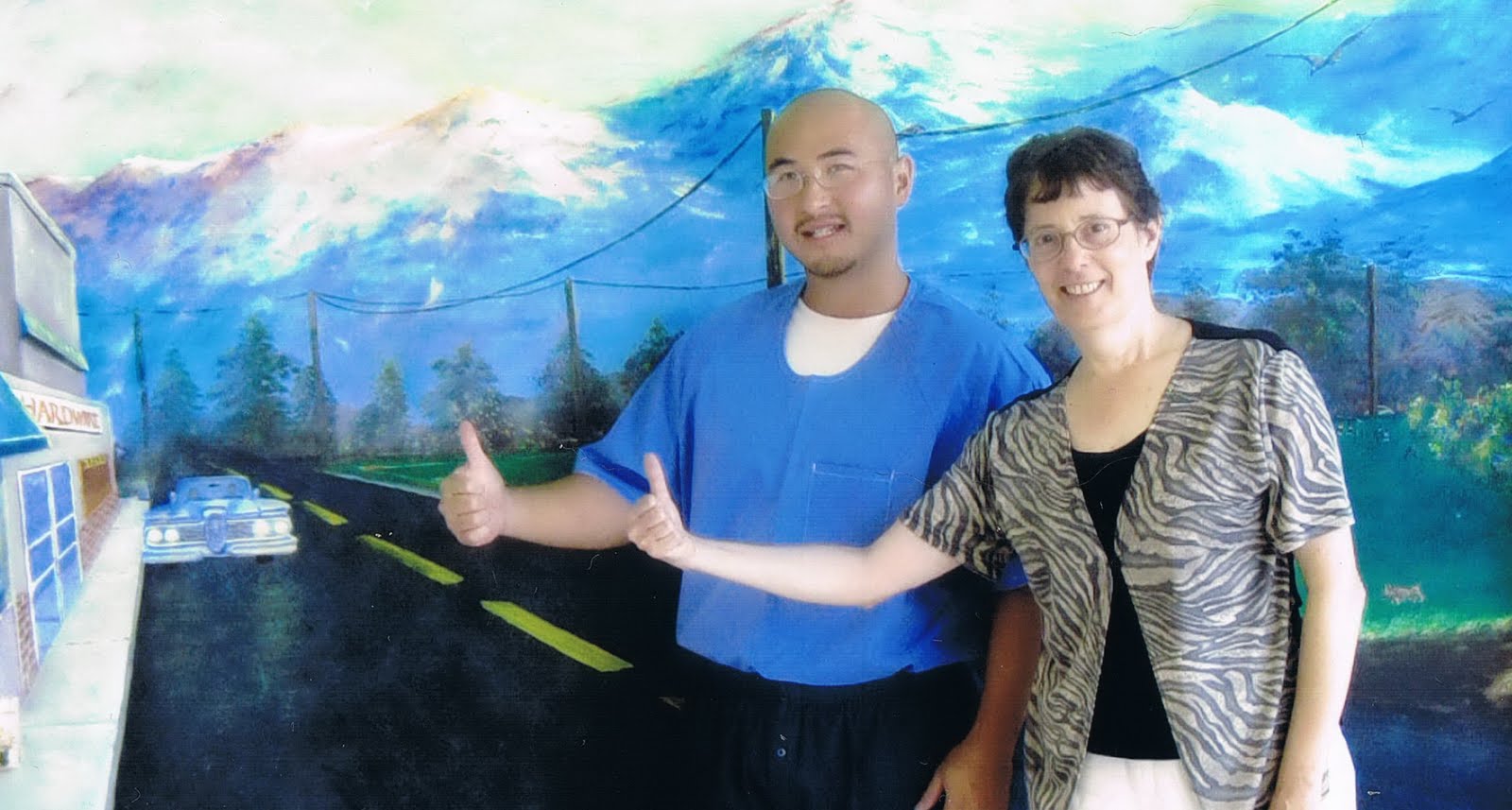
My latest in LA Progressive: March 11, 2011 By Diane Lefer He was a 16-year-old kid when he was brought to the Chicago police station on suspicion of arson murder. He was attached to a ring in the wall, beaten, had his testicles squeezed until he felt as though his head would pop right off his body. The cops told him the torture would stop as soon as he confessed to the Cook County Assistant DA. He refused. He was not allowed to talk to his mother. He was not allowed a lawyer. The torture started again. He confessed. Mark Clements was labeled a mass murderer. He was labeled mentally retarded. He is one of hundreds of men of color tortured–some with metal rods shoved up their rectums–by Chicago police detectives under the command of Jon Burge. Though Burge has now been sentenced to four-and-a-half years in prison, many of the tortured men remain locked up. Clements lost 28 years of his life until he was finally exonerated. Wednesday evening, speaking in the auditorium of the Leavey Library at the University of Southern California–obviously intelligent and in no way developmentally disabled–he said, “If I’d been two years older, they would’ve thrown me on a gurney.” What would have happened then to his accusations of torture? “A dead man can’t talk.” He recalled, “You sit in prison and you’re voiceless because you’ve been labeled as something that you’re not.” Voiceless no more, Clements came to Los Angeles along with Paul Wright, editor of Prison Legal News and author of Prison Profiteers, and Cameron Sturdevant, a Bay Area activist with the Campaign to End the Death Penalty as part of that organization’s national speaking tour. The event– Lethal Injustice: Standing Against the Death Penalty and Harsh Punishment — was moderated by local activist Danielle Heck and sponsored by the USC-campus club of the International Socialist Organization — which made it very fitting that Wright described “capital punishment” as “those without the capital get the punishment.” Or as he put it, the death penalty means “the State can kill you as long as they give you a trial. The State doesn’t say your lawyer has to be awake.” Wednesday, March 9th was a fitting date–one celebrated by the handful of students and about 50 community members in attendance — because earlier that day, Governor Pat Quinn signed into law the abolition of the death penalty in Illinois following years of evidence of wrongful convictions. (California, by contrast, today has more people on death row than any other state and Los Angeles County under D.A. Steve Cooley is, according to Sturdevant, the “death penalty capital.”) Wright sees a direct connection between the death penalty and extreme sentencing. “Once you have the death penalty on the table, everything else pales in comparison,” he said and so people don’t recognize the injustice of harsh sentences. “In Russia, the maximum sentence is 15 years–left over from Stalin’s time. In China, it’s 20 years maximum,” while in California people are serving life sentences for stealing pizza or videos. In the case I’ve written about before, there’s my friend Duc, serving life for a teenage incident in which not a single person was hurt or injured in any way. According to Sturdevant, thanks to the Three Strikes law, California prisons now house 40,000 people serving indeterminate sentences that can keep them inside for the rest of their lives. (I do give Cooley credit for saying Three Strikes needs to be reformed.) Decrying the “two-tiered system of justice,” Wright pointed out that while former Alabama governor Don Siegelman has spent millions to defend himself against corruption charges, while he was in office, he put a $400 cap on compensation for court-appointed attorneys representing indigent defendants facing the death penalty. Is it any wonder poor people are inadequately represented in court while being overrepresented in prison and on death row? Our prison system, said Wright, “is a tool of class war.” He thinks some people do belong in prison: “They’re sitting in government offices and they’re sitting in corporate suites.” As for the death penalty, its purpose in his opinion is ideological. He reminded the audience that Bradley Manning now faces a possible death sentence while not a single soldier who committed any of the war crimes revealed by the documents Manning leaked has been charged with a crime. Sturdevant spoke of his failed efforts to stop the 1996 execution of William Bonin, the notorious “Freeway Killer” who was convicted of the rapes and murders of 14 young men and boys. The crimes were horrific, but Bonin had been victimized by sexual abuse as a child. He was hospitalized in a mental hospital after two tours of active duty in Vietnam but under the Reagan administration policy of deinstitutionalization, Bonin ended up, still mentally ill, on the street. “The State of California was there to kill him,” Sturdevant concluded, “but not to provide any help.” Indeed, our prisons have become the very expensive and inhuman substitute for affordable housing, adequate public education, living-wage employment, mental health services, and welfare. And, said Clements, “We’re sitting here listening to a government that lies to us saying ‘We ain’t got no money.’” Wright cited estimates that from 40-80% of inmates are illiterate or functionally illiterate, but educational programs have been cut. Most of these prisoners will be released at some point and what sort of livelihood are they likely to find? Clements was taking college courses while in prison until, under the Clinton administration, the grants that made this possible were eliminated nationwide. Today, said Wright, Texas is the only state with funding so that prisoners can obtain higher education. Here in California, I’ll never forget the struggle Duc went through in prison as state authorities again and again blocked his attempts to finish high school. “We’ve had a criminal justice solution to social ills,” according to Wright who said that Mario Cuomo, the former New York governor and Democratic icon, took federal funds intended for low-income housing and used the money to build 50,000 prison cells instead. The speakers stressed that public safety is better served by education, treatment, and rehabilitation rather than prolonged incarceration and State-sanctioned murder. “We better wake up because we have failed,” said Clements. “Where is the love?” He–whose own youth was spent in a cage–today works with youth, the kids who are labeled “out of control” and he warns we have to listen to young people. “A lot of their anger is directed because they have no one to talk to. You got to pat them along to pull them out of the mud.” “We welcome the hard questions,” said Sturdevant when an audience member raised the question of victims’ families and said if he’d lost a family member to murder, he wouldn’t want to see the killer walking down the street. “I’m sorry if my presence here offends you,” said Wright who served 17 years for murder. “Unlike Mark,” he acknowledged, “I did it.” But if Paul Wright is a danger today, I believe the only threat he poses is to the continuing injustice of the system.
After reading The Blessing Next to the Wound, Tatiana -- a wonderful poet/performer in her own right -- met us in Pasadena, bearing buñuelos fresh from her recent trip to Miami. Hector made coffee. We talked, and talked, and talked. Here's what she wrote: (and if you'd rather see it with photos and correct layout, please click here
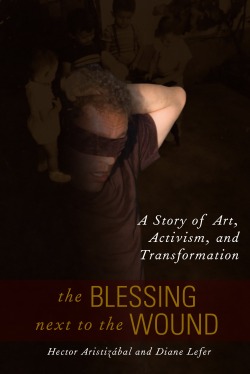
Sunday, November 28 The Blessing Next to the Wound JOURNEYING INTO THE JUNGLE by tatiana de la tierra Inside the psyche of a young man being tortured in that cell at the top of a hill there is a book that will one day tell his story: The Blessing Next to the Wound. A political memoir rife with intimate and harrowing details of fractured life, this book takes deeply personal wounds on a journey to global healing. This is the story of Hector Aristizábal, a Colombian theater artist, activist and psychologist. It is about some difficult issues—abortion, homophobia, drug addiction, racism, exile, prison, immigration, murder, torture, and the U.S. juvenile justice system. It is about the intersection of creativity, ruptured reality, ritual, and therapy. And it is about Colombia, where the story begins and returns to at critical junctures.
Co-written with Diane Lefer, The Blessing takes place in Medellín, Colombia and Los Angeles, California, with many stops throughout the world. Aristizábal hails from the low-income barrios on the outskirts of Medellín. Rounded up at four in the morning in 1982 by the army in search of guerrilleros, the twenty-two year old university student was taken to a compound where he underwent questioning along with beatings, waterboarding, electric shocks, mock executions, and psychological terror. Ten days later, thanks to pressure from human rights activists, he was released (and went into hiding). His brother Juan Fernando, who had also been arrested, was imprisoned for several months for carrying a machete. In 1999, when his brother was murdered by paramilitaries for his past ties to the Ejército de Liberación Nacional guerrilla group, the enraged Aristizábal demanded an autopsy of his brother’s corpse and photographed the event.
Out of this experience came “Nightwind,” a solo play that re-enacts Aristizábal’s torture and his brother’s autopsy. Co-created with author Diane Lefer and musician Enzo Fina, Aristizábal performs “Nightwind” in the U.S. and around the world.
“The play opened doors for me,” he says. Diane Lefer, Hector and I meet for coffee and conversation one morning in Pasadena. He’s recently returned from an ayahuasca retreat in the Amazon jungle, where he experienced the plant’s healing, illuminating, and maddening psychedelic “pintas” for the first time. Later tonight, he’s heading to Nepal to perform “Nightwind” and “Kiss of the Spider Woman” at the Kathmandu International Theatre Festival. “‘Nightwind’ opened the chamber of torture for people to see inside, opening the chamber for me to come out of it and not continue to live in it.”
The play also led to further collaboration between Lefer and Aristizábal, including writing and publishing magazine articles. The two joined political and artistic forces after people responded with suggestions that they write a book. Armed with Hector’s journal and his Masters thesis, Diane immersed herself in his voice and interviewed him, his family and others for further details. “Writing the book was harder on me than on him,” she says. “Telling your own story can be cathartic. Putting yourself in someone else’s head, that’s something else. Also I kind of lost track of myself for the years we worked on this, being so identified with his experience.”
Disgusted with U.S. politics and this country’s role in the world, Diane dropped out of college and ran away to Mexico years ago. She refers to herself as a “young idiot” for the time she took a bus through Guatemala and “got a guy with a motorcycle to take me into the United Fruit Company plantation,” where she marched to the manager’s house and demanded to see “the books.” Today, she is hooded and wears an orange Guantanamo outfit on her profile picture on Facebook. This was taken by Robin Lynne Gibson, a photographer who witnessed Lefer in street protest attire the day she was mistaken for a terrorist by the Los Angeles Police Department. The Facebook caption reads, “I thought I’d be able to change the photo by now.”
Lefer writes fiction, advocacy journalism, drama, and nonfiction. She avidly supports Duc Ta, a young man who’s been unjustly locked up in California prisons since 1999. Her activist affiliations include Witness for Peace, the Program for Torture Victims, and the Colombia Peace Project. As her “young idiot” spirit lives on, Diane Lefer is just about the perfect person to bring The Blessing Next to the Wound: A Story of Art, Activism and Transformation to light.
How did Hector like having his voice channeled by Diane? “It was fantastic. I didn’t have to sit,” he says. “The book exists thanks to Diane, her artistry. She forced me to go deeper… She provided the structure and made final decisions.” One decision she made was to cast the protagonist as truthfully as possible without glossing over his flaws. “When he does workshops, people come to him like he’s this great hero… I want people reading the book to feel like they can overcome anything that’s happened in their past. He’s not perfect. He has issues.”
A structural decision she made was to carry the story back and forth, from Colombia to the U.S. and beyond, out of chronological order, letting the themes drive the narrative. In twelve chapters, we are exposed to a man’s private life—a marriage that blooms and crumbles before our eyes, the lingering psychological effects of torture, a fetus pumping with life that falls into the palms of the hands, a group of men shedding tears for the grieving brother who is unable to cry for himself. Just as important are sociopolitical discussions about complex issues brought out from the personal, and abundant anecdotes and psychological perspectives about people healing through crisis.
With this approach, The Blessing transcends any one person’s experience. For example, “Life from Barren Rock” is a chapter about Hernán Dario, Hector’s thirty-one year old brother who is dying of AIDS after a lifetime of unacknowledged and unaccepted homosexuality. While the chapter centers on his dying brother’s life, it is also about homophobia, the sexilio of gay Latin Americans who leave their countries of birth to live freely as homosexuals, transgender mujeres in Los Angeles, and the power of ritual.
A lot happens in The Blessing, and it took me a bit to get accustomed to narrative jumping around—from personal voice to political discourse, from Medellín to Palestine to Passover dinner, from Hector being in one country, then another, on and on. The book is packed with so many references and information, I wish it had an index. And I appreciate how Colombia is represented here; I can see it vividly. This book is great for anyone who wants to understand the country’s complex history, with concise explanations of La Violencia, guerrilla groups, cocaine mafias, paramilitaries, and phenomena such as los gamines, los deshechables (the disposible ones), young hired killers known as sicarios, and much more.
With training in the performance arts in Colombia, Masters degrees in psychology and marriage and family counseling, twenty years of psychotherapy under his belt, serious personal drama and a penchant for mixing it all up, Aristizábal has developed, over time, a comprehensive and creative approach to healing. He travels the world now, teaching techniques inspired by Augusto Boal’s Theatre of the Oppressed. “I also bring psychodrama and the use of ritual, using theatre as a laboratory to explore alternatives to conflict, and theatre with community groups to reconnect with roots of where we come from.” He has offered his workshops all over, including Palestine, Afghanistan, Nepal, India, Northern Ireland, Israel, Canada, Spain, Colombia, Cuba, and the U.S. In Southern California, he has worked with marginalized communities—immigrants, gang members, torture survivors, pregnant teenagers, AIDS patients, “at risk” students and youth in juvenile detention centers.
His subject matter is heavy, I say. How can you focus so much energy on everything that’s painful and wrong in the world? “I hear you, I hear that from my family,” he says. “My sister says ‘you’re morboso’.”
But I won’t tag him as morbid. It’s just that he “goes there” to places that are ugly and uncomfortable. And he stays there long enough to recount, explore, bear witness, find the blessing, and transform.
“My wounds have informed my work,” he says. His brother’s homosexuality and struggle against homophobia inspired him to become a therapist. The time spent with his dying brother led to his work in hospice. He framed his experience with torture as an initiation that marked the beginning of a new life. The death of his murdered brother brought shamanism into his personal healing. When confronted with teenage peace activists from Colombia’s Red Juvenil, his internal terrorist shifted out of retaliation.
“The wound is a tomb for the things that need to die and for the things that are born out of the wound… Most traditional societies believe that when something happens to a person it is important to pay attention to it and find meaning in it, not pretend it didn’t happen.” He uses medical analogy to make his case: a physical wound requires cleaning and disinfecting before it can be sewn up. “In psychic wounds, the idea is not to wound ourselves but to look inside to see what happened to us. What are the internal resources that are awakened in us? … The idea is sufrimiento. To suffer is to bear it, to be able to understand what is in pain… to learn from the pain.”
I get it. A part of me wishes I had not read this book because there are things I’ve tucked away that I don’t want to feel or remember. Yet I am grateful that a book exists to take me there. “We have to do the soul’s work, which is going to the darkness to find the light,” says Hector. “That’s ayahuasca. You go to a dark place and see things; that’s where the light is. You go to the jungle to go into your own jungle. It is a paradox, but it is a beautiful one.”
-------- The Blessing Next to the Wound: A Story of Art, Activism, and Transformation by Hector Aristizábal and Diane Lefer. Lantern Books, 2010. Available in paperback and e-book format for Amazon’s kindle. Labels: alternative healing, Colombia, Diane Lefer, Hector
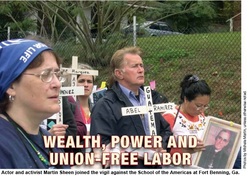
'You can only oppress people for so long' How the U.S. Army’s School of the Americas in Georgia uses your tax dollars to train soldiers who torture – and kill – organizers in Latin America In an interrogation cell at the Medellin headquarters of the Colombian military in 1982, the guard covered Hector Aristizabal’s hands and arms with a wet sweatshirt, tied a lasso around his hands, threw the other end of the rope over a wood beam in the ceiling of the cell, drew Aristizabal’s arms above him and began to raise his bruised and battered body off the ground, held by nothing except his tired, bound hands and wrists squeezed tightly together by the taut rope. His blindfold meant he couldn’t see when the guard took the first swing at him. But he felt the pain soon enough. The guard began to beat Aristizabal as he swayed back and forth, hanging from the ceiling. The blows came steadily. By that point, pain and fear were his constant companions. He had his head submerged in a dirty bucket of water repeatedly until he felt as if he was drowning. Rivers of pain pulsed through his convulsing body with electroshock. He was denied water for days. He wasn’t allowed to use the bathroom. He was starved, so much so that a guard who had a moment of pity once tossed a stripped meat bone from his dinner through the cell bars to a desperate Aristizabal. Aristizabal hungrily sucked the marrow from the bone. He remembers the taste of that marrow today, 28 years later. After 10 days he was released, but his brother and his companions were jailed, all because police found a book in their possession that police said made them suspected anti-government subversives, which they were not. Years later his brother would be murdered, Aristizabal says, by the Colombian paramilitary. A member of the Screen Actors Guild, Aristizabal settled in California after moving to the United States in 1989. He had grown tired of watching a steady stream of people he loved tortured and killed by Colombian paramilitary death squads. The same Colombian military that tortured Aristizabal – and those thought to have killed his brother, and tortured and murdered union organizers and other human rights advocates for decades – have been trained in counterinsurgence techniques with your federal tax dollars. That training has taken place on U.S. soil since 1984. Many members of the Colombian military, and paramilitary units from countries throughout Central and South America, are graduates of the U.S. Army School of the Americas (SOA) at Fort Benning in Columbus, Ga. SOA training facilities and personnel represent a small population at the huge Fort Benning base, where our honorable troops serve. The base has an average daily population of more than 100,000 members of all the armed forces of the U.S. military and is the Army’s largest training installation. It’s capable of deploying units anywhere in the world. In contrast, the SOA has roughly 700 to 1,000 students and represents a small portion of the distinguished base’s activity. The combat training school for Latin American military members opened in Panama in 1946 at the beginning of the Cold War and the early stage of America’s post-war resurgence as an economic powerhouse. Fighting communism and protecting American natural resource interests in other countries were key, especially where our hemispheric neighbors in Central and South America were concerned. Since its inception in 1946, the SOA has been heavily funded with U.S. tax dollars. When it moved to Fort Benning in 1984, however, Panamanians were happy to see it go. Said then-Panamanian President Jorge Illueca: “[SOA is the] biggest base for destabilization in Latin America.” Since 1946, School of the Americas Watch (SOAW), a group that has been fighting for years to close the SOA, estimates roughly 60,000 soldiers in Latin America have graduated from the school, learning psychological warfare, sniper training, counterinsurgency techniques and interrogation tactics. Graduates typically go back to their home countries and join secret police units or death squads that target anyone the SOA has trained them to view as threats to their country. According to SOAW, suspects are defined as educators, religious workers, student leaders and anyone (including union organizers) working to decrease the poverty created by staggering income and land ownership disparities in Central and South American countries where SOA graduates operate. Countless Latin Americans have been targeted by SOA graduates with torture, rape, assassination and disappearance. The watch group says SOA’s graduates include notorious dictators such as Efraín Rios Montt of Guatemala and Hugo Banzer of Bolivia. They also say graduates were responsible for the El Mozote massacre of 900 civilians in El Salvador, the assassination of Archbishop Oscar Romero, the 2005 killings of eight members of the San José de Apartadó peace community in Colombia, and the 2009 overthrow of the democratically elected president Zelaya in Honduras. Union organizers in Colombia are particularly targeted by the country’s SOA-trained military with threats and violence, including murder. According to the Canadian Foundation for the Americas, the murder rate for union organizers in Colombia reached its peak of 275 in 1996. While the rate has decreased since then, SOAW reports that Colombia is still the most dangerous place for union organizing in the world. The International Federation of Free Trade Unions said trade union activists are being “systematically eliminated with most of the killings carried out by paramilitary groups which enjoy the tacit complicity of the SOA-trained security forces.” Why is the United States training military members who later torture and kill to suppress union organizing and other social justice movements in Latin America? The answer is an old one: wealth, power and union-free labor. “For the past several decades, the United States was allied with dictators in Latin America who helped that region’s small, elite group of wealthy landowners,” said SOAW founder Father Roy Bourgeois, a Louisiana native, who lives just outside the gates of the school in Fort Benning where he carries on his work. “We got involved militarily with these countries because they were rich in natural resources, with coffee in Colombia, bananas in Central America, copper in Chile, petroleum in Venezuela and tin in Bolivia, for example. With their militaries, the U.S. joined with them to exploit those natural resources and to pay workers $1 a day and exploit cheap labor. There were no labor laws there,” said Bourgeois. “We were like the new conquistadors. We enriched ourselves off the backs of the poor,” he added. Lobbying Congress to cut aid to SOA is one approach Bourgeois and a growing anti-SOA grassroots movement uses to try to shut it down. Another is raising awareness among Americans that their federal tax dollars are funding the training of violent oppressors in Latin America who target union organizers working for the same rights for workers that many Americans have. Besides educating the public about SOA and lobbying Congress to pull the plug on SOA funding, a third tactic began in the 1990s and has grown ever since. “We decided to gather at Fort Benning each November around the time of a particularly vicious massacre perpetrated at the hands of SOA graduates. On Nov. 16, 1989, at Jesuit University in San Salvador, El Salvador, in Central America, military police entered the campus after midnight, dragged six priests, a young mother and her daughter out of their rooms and slaughtered them,” said Bourgeois. “It made the front pages of the news worldwide. They were killed for trying to bring about dialog about the small elite that had most of the land and the wealth, speaking out against worship of wealth and power, and criticizing the suffering caused by U.S. foreign policy there,” he said. The massacre sparked a congressional investigation, which concluded that those responsible were trained at the SOA. “We wanted to express our solidarity with the people who are victims and to keep alive the memories of the thousands killed by these graduates,” said Bourgeois. That first vigil in 1990 attracted about 100 people and grew each year. Now as many as 20,000 participate. The SOA’s track record of targeting union organizers is especially poignant for those who care about the rights of workers everywhere to organize. UAW President Bob King started attending the November vigils in 2001. “In our early organizing days the UAW would never have been successful without the support of other unions and people of conscience.We have a moral responsibility to support unionists, community activists and others in Central America working for democracy and justice,” King said. SOAW says an SOA training manual the Pentagon released in 1996 stresses that graduates should go after union organizers for false imprisonment, torture and execution, and these tactics should be used against those who “support union organizing or recruiting; distribute propaganda in favor of the interests of workers; sympathize with demonstrators or strikes; or make accusations that the government has failed to meet the basic needs of the people.” Bourgeois said that’s why a growing number of UAW members have been coming to the vigils. “The big word is solidarity. Union members and I are at the vigil to express our solidarity as workers,” he said. Some union members have even made the sacrifice of being voluntarily arrested at the vigil and imprisoned. “In 1997 I went to my first vigil,” said Rebecca Kanner, who helped organize workers at the Ecology Center of Ann Arbor (Mich.), members of UAW Local 174. She went back to the vigil year after year and saw a growing number of UAW members there. It made perfect sense to her. “SOA graduates target anyone who wants change – especially union organizers,” said Kanner. “Organizers in Central and Latin America are trying to give a voice to the people, give them justice. People are barely paid anything down there and work long hours in unsafe conditions.” At the 2000 vigil Kanner chose to make her powerful statement by being arrested when she crossed the main gate on the base at Fort Benning. “When you cross into the base, it’s very spiritual,” said Kanner, adding she was inspired to direct action by early school teachings about the duty to speak out against injustice. “I also was inspired by the Jewish concept of ‘tikkun olam.’ Translated from Hebrew, this means the just ordering of human society and the world or, more literally, the repair of the world,” she said. “And I was inspired by the Jewish prophetic tradition of social justice. As a Jew, I am moved to work to repair the tragic consequences of the SOA.” She was arrested and stood trial in May 2001 with 25 co-defendants who also crossed the line that day in 2000. Kanner said the judge listened to each defendants’ statements with patience, then sentenced most of them to six months in prison. “Bob King saw my story in a local newspaper, and when we talked he asked what he could do to support me,” said Kanner. She asked him to take her place at the November 2001 vigil, which she would miss because she’d still be in prison. So he did. “We’re hoping to have more UAW members come to these vigils,” said Kanner. “That’s another reason I crossed the line.” Kanner has been attending the vigils every year since she was released from prison in 2002. Brian Schneck is president of 1,500-member UAW Local 259, based in Hicksville, N.Y., representing auto dealership workers. Schneck has attended all but one of the SOA vigils since 2003 with many of his brothers and sisters from the local. “In 2003 my local president, Bill Pickering, attended a UAW Independents, Parts and Suppliers [IPS] Conference in Pittsburgh. At the time, Bob King was head of IPS, and he brought in Father Roy Bourgeois as a guest speaker. His presentation inspired me, so I’ve gone every year except for 2005 when we had difficult negotiations at the local,” said Schneck. “The militaries in Central and South American nations are taught by the SOA to engage in terrorism, target union sympathizers, religious leaders and educators – all to keep people down. We believe that shouldn’t be happening,” Schneck added. “Since the Sept. 11 terrorist attacks, we’ve been told that terrorism is bad and we have to root it out across the globe. But every day our tax dollars fund the SOA’s teaching of terrorism.” There has been a slow response from the U.S. military as public pressure to close the SOA has grown since the vigils began. Congress has voted regularly on SOA funding and, while it still passes, the margin of support for the SOA gets smaller with each year’s vote. In 1996 the Pentagon reluctantly released some internal teaching documents from the SOA. And in 2001 it even changed the name of the School of the Americas to the Western Hemisphere Institute for Security Cooperation (WHINSEC) to improve the school’s public image, although SOA opponents said the name change was only a cosmetic diversion from a curriculam teaching the same core values. Graduates are still returning to their home countries to join secret police and death squad units. But, Bourgeois said, every vigil makes a difference because attendance continues to grow, reaching 20,000 participants in recent years. And he firmly believes they will reach their goal of closing the SOA thanks to a universal thirst for freedom from persecution. “You can only oppress people for so long,” said Bourgeois. Joan Silvi 'PROJECT X' MATERIALS Time line of SOA training manuals on ‘coercive techniques’ The origins of the counterintelligence training manuals used at the School of the Americas (SOA) have a strong tie to U.S. involvement in the Cold War battle against communism, which has long been prominent in the training manuals. Here’s the time line of their development and later public exposure that has helped generate growing public interest in shutting down the SOA: 1960s: A CIA training Counterintelligence Interrogation document is put into use by U.S. agents against communist subversion. This manual is the source of much of the material in the CIA’s secret Human Resource Exploitation - 1983 (HRE) manual later used in Latin American military training by the U.S. military. The U.S. Army’s Project X begins counterinsurgency training for U.S. allies around the world based on anti-communism tactics used in Vietnam. Project X materials are later used to create training manuals for the School of the Americas. 1982: U.S. Department of Defense approves SOA training manuals based on Project X documents. 1982-1987: U.S. military trainers begin using HRE manual for training of Latin American militaries. 1987-1991: Counterinsurgency manuals based on SOA training materials are drafted by the U.S. Army and distributed to militaries throughout Latin America, including El Salvador, Guatemala, Ecuador and Peru, and used at the SOA. 1988: The New York Times alleges the U.S. taught the Honduran military torture techniques. The HRE manual is made public during a subsequent congressional hearing. 1996: CIA training manuals are mentioned in a presidential report on intelligence oversight in Guatemala. The report is made public. After intense public pressure from human rights groups, the Pentagon publicly releases the SOA-based, U.S. training manuals distributed to Latin American militaries. The Washington Post later prints excerpts in its article “U.S. Instructed Latinos on Executions, Torture.” 1997: The manuals are finally declassified in response to 1994 Baltimore Sun FOIA request. The public can now verify that each has a chapter devoted to “coercive techniques.” Sources: “Declassified Army and CIA Manuals Used in Latin America: An Analysis of Their Content” by Lisa Haugaard. Feb. 18, 1997. Latin America Working Group and soaw.org. “Prisoner Abuse: Patterns from the Past” by Thomas Blanton and Peter Kornbluh. May 12, 2004. National Security Archive Electronic Briefing Book No. 122 and soaw.org. Department of Defense, “USSOUTHCOM CI Training-Supplemental Information,” (Confidential), July 31, 1991, and soaw.org. prev next
Social Justice Theatre for Colombia LA's Hector Aristizabal brings creative tools for healing back to the homeland he left after arrest and torture By Diane Lefer Published on LatinoLA: August 19, 2010 When Colombian exile Hector Aristizábal returned to his homeland for the month of July 2010 to train peace and justice workers in social justice theatre techniques, in Cúcuta, he found the issue troubling the community was the border conflict between Colombia and Venezuela. Whenever the political rhetoric heats up, cross border trade is disrupted and soldiers on both sides of the border rough up and rob people carrying food and other merchandise.
In Barrancabermeja, it was worker demands for fair treatment by the oil extraction industry in a city where union membership can mean a death sentence.
In Medellín, it was the resurgence of the paramilitary death squads -- the "paracos"--who have taken armed control over the poorest barrios. They extort "vacunas"--vaccination against being killed--from public transport workers driving into the area. They enforce curfews and decide who enters and who leaves alive. They cleanse--i.e., kill--people they perceive as anti-social elements, including teenager punk rockers. They make death threats against a storyteller leading free writing workshops for kids in the public park that Juanes created as a gift to the city. They force out new arrivals from the countryside who are among the 4 million Colombians violently displaced when the rich and powerful grab their land.
At the same time, everywhere he went Aristizábal was deeply impressed that in the midst of so much terror, people also wanted help in ending the violence--especially gender-based violence--in their personal lives. He helped them address their concerns through Forum Theatre which was first developed by Augusto Boal, the Brazilian theatre artist and activist who died in May 2009,
As Aristizábal explained on his return to Los Angeles, "Forum Theatre is one of the techniques in Boal's Theatre of the Oppressed system for popular education and social action. In Colombia, I invited people to create scenes that showed the oppression they experience in their lives. We performed for the public and then invited audience members to intervene. They come up onstage and role-play to see if they can influence events in a different direction and change the negative outcome."
Again and again, Aristizábal saw the same series of scenes: A woman works hard at home preparing foods that her husband can take out to the street to sell. Then she asks his permission to go to a center where she can learn to read and write so she can help the kids with their homework. His response is, "What the hell are you talking about? Just stay home and take care of the four kids!" When he leaves, she asks the older kids to take care of things and she goes to class. Her husband tracks her down, pulls her out of the classroom and beats her.
When the audience was invited to intervene in the action, a woman took the stage and stood up to the husband. "Don't you hit me! I deserve to learn to read and write. This is what's best for our children, and I'm going to do it!"
"Do you think that would work?" Aristizábal asked the women present. "Is this possible?"
Before anyone could answer, the woman onstage began to tremble and cry. "I did it," she said. "This is exactly what I did. And today, here I am attending this training," she said, giving courage and hope to others. "And my husband is home watching the kids."
Men are changing behavior, too, said Aristizábal, noting the movement called La Nueva Masculinidad and even a group called El Machismo Mata, in which men try to end the ways in which violent behavior has become connected to the male identity.
"They did a scene in which one guy is knocked over during a soccer game. One member of his team just says, 'Get up, jerk,' and when another player asks instead if he's OK and tries to give him a hand, the others shout homophobic insults at him for being soft and showing concern. So what do you do in that moment? How do you respond to the situation?"
Aristizábal's workshops were sponsored by Cercapaz (Cooperation between State and Civil Society to Develop Peace), funded by the German government in cooperation with Colombia and, in Cúcuta, with support from Norway as well.
He pointed out that as the US continues the failed war on drugs, wasting billions of dollars through Plan Colombia, and will establish seven military bases in Colombia (unless that nation's Constitutional Court blocks the move) while turning a blind eye to repression, Cercapaz takes an entirely different approach. "They believe the way to bolster stable governance in Colombia is to empower civil society and encourage ordinary people to enter into dialogue with government institutions to secure their rights in a peaceful, democratic way." Cercapaz also provides funds to mayors of small towns who want to start projects to assist the displaced. "It is not a radical organization," Aristizábal explained. "They aren't supposed to trouble the waters, but because they work with the poorest and most marginalized people in the country they cannot avoid recognizing injustice and inequality."
Aristizábal has had firsthand knowledge of injustice. In 1982, falsely accused of guerrilla activity, he was arrested and tortured by the US-trained military and believes the only reason his life was spared was that an international human rights group came to the barracks looking for him. The story of his life in Colombia and subsequent social justice work in exile is told in The Blessing Next to the Wound, published in June by Lantern Books.
|